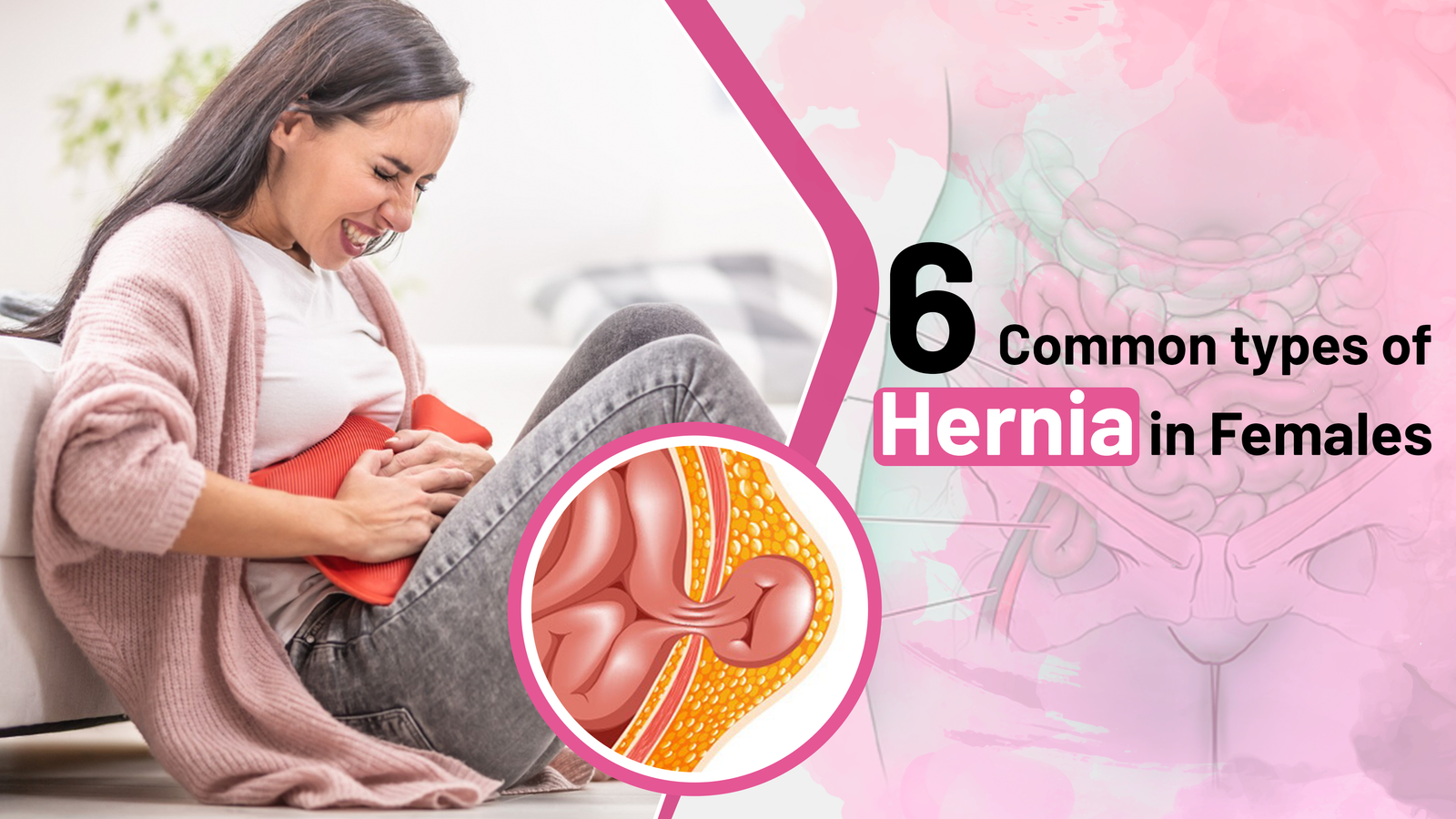
Let me say this first—yes, women get hernias. Real ones. Painful ones. And I treat them often. The idea that hernias are only a "male thing" is just wrong. I’ve had many female patients come to me after months (even years) of discomfort. They were told it’s acidity, or muscle strain, or "maybe hormones." It’s frustrating.
So let’s clear the air. There are different types of hernia in female patients. And they don’t always look or feel the way you’d expect. I’ll explain the 6 common types of hernia in females in plain terms. No fluff. No sugar-coating.
What Exactly Is a Hernia?
A hernia occurs when an internal organ, tissue, or fat (usually a portion of the intestine) pushes past a weak area in the muscles or tissues holding it in place.
Think of your abdominal wall as a strong sheet holding everything inside. If there's an internal tear or thin spot, the pressure of inside forces your insides out. This can happen when you cough, lift, or are pregnant.
This bulge might:
- Be visible (like a lump)
- Be invisible but cause strange sensations (pulling, pressure, soreness)
- Come and go depending on posture or activity
Important: Not all hernias look obvious. Especially in women, hernias can exist without a bulge and still cause pain or serious complications.
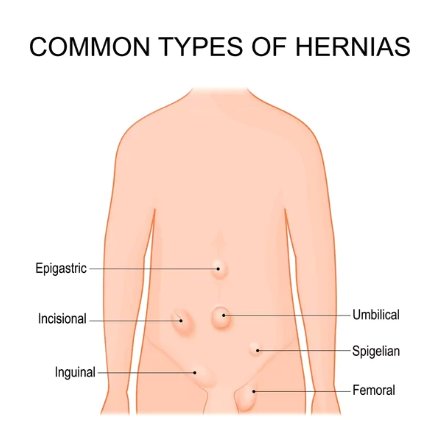
1. Inguinal Hernia in Females
It’s more common in men, yes. But women get it too. The bulge may show in the groin. Or not. That’s the thing. In many women, there's no visible swelling. Just a weird, dragging feeling. Soreness when lifting. A sharp pull when sneezing.
It’s easy to miss. It’s easy to mislabel as ovarian pain or ligament strain. But it’s a hernia, and if it grows or twists, it can get serious.
2. Femoral Hernia in Females
This one shows up near the upper thigh, below the groin line. Women are more likely to get it than men. It can stay silent. No pain. No visible bump. Then one day, sharp groin pain, nausea, and you land in the emergency department.
Why? Because femoral hernias can trap the intestine. That’s a surgical emergency. It’s small but dangerous. I always check for this in women who feel lower belly pressure and can’t explain it.
3. Umbilical Hernia
This one is easier to spot. Right around or just above the belly button. Common after pregnancy, especially after two or more pregnancies. The navel pops out slightly. Or you feel pressure when standing too long.
It can feel like bloating, but it’s not. Push gently—if it moves in and out, that’s probably a hernia. It might not hurt now, but if ignored, it could become painful or trapped later.
4. Incisional Hernia
Any surgery that cuts through your belly wall—C-section, hysterectomy, open appendix—leaves a weak spot. That’s where this kind of shows up. It may take months. Sometimes years. You’ll feel a soft bulge under your scar. It may pull or stretch when you bend.
Some ignore it. Some use belts. But it doesn’t go away. Once it’s there, only hernia surgery can fix it properly.
5. Hiatal Hernia
No bulge. No lump. Nothing on the surface. But this one causes acid reflux, burning, sometimes even pain in the chest. Happens when the upper part of the stomach slips through the diaphragm.
You eat a little and feel heavy. Or lie down and feel stuff rising up your throat. That’s often this. Not always easy to detect without a scan. But I see it a lot in women over 45. Especially if weight has been fluctuating.
6. Obturator Hernia
Very rare. But very real. And more common in older, thin women. It hides deep inside the pelvis. No bulge. You’ll feel sharp, sudden pain inside the thigh. Sometimes like a nerve shock. You walk, and it worsens.
Many doctors miss it. But I include it here because it’s sneaky. And if untreated, it can trap the intestine just like the femoral type. That’s dangerous.
So, What Is Hernia in Women?
To put it simply, it’s when tissue—usually part of the intestine or fat—pushes through a weak spot in the muscle wall. That pressure can cause pain, swelling, or no symptoms at all. It depends.
The issue is, in women, the signs aren’t always obvious. No big bulge. No clear pain point. So it gets blamed on digestion, hormones, or "just normal discomfort." That’s not okay.
If your body’s trying to tell you something, don’t ignore it. A female real hernia is something I take seriously. You should, too.
Final Thoughts
The hernias that women suffer from are real. They're often misdiagnosed and dismissed. Even if there is no bulge, it may still be present. It doesn't matter if it's an unexplained groin ache, a strange feeling of pulling, or a pressure that won't let up. You should not ignore your symptoms. They are real and deserve more attention than a simple shrug. The sooner we detect a hernia the easier it will be to treat it and the less likely that it will become an emergency.
With over 10+ years of experience in diagnosing and treating all types of hernias, I’ve helped countless women finally get the answers they’ve been searching for. As the best general surgeon in Gurgaon, I’m here to listen, assess, and guide you with straight talk and zero pressure. If something feels off, don’t wait it out. Book a consultation, and let’s figure it out—because you deserve clarity, relief, and care that actually sees you.