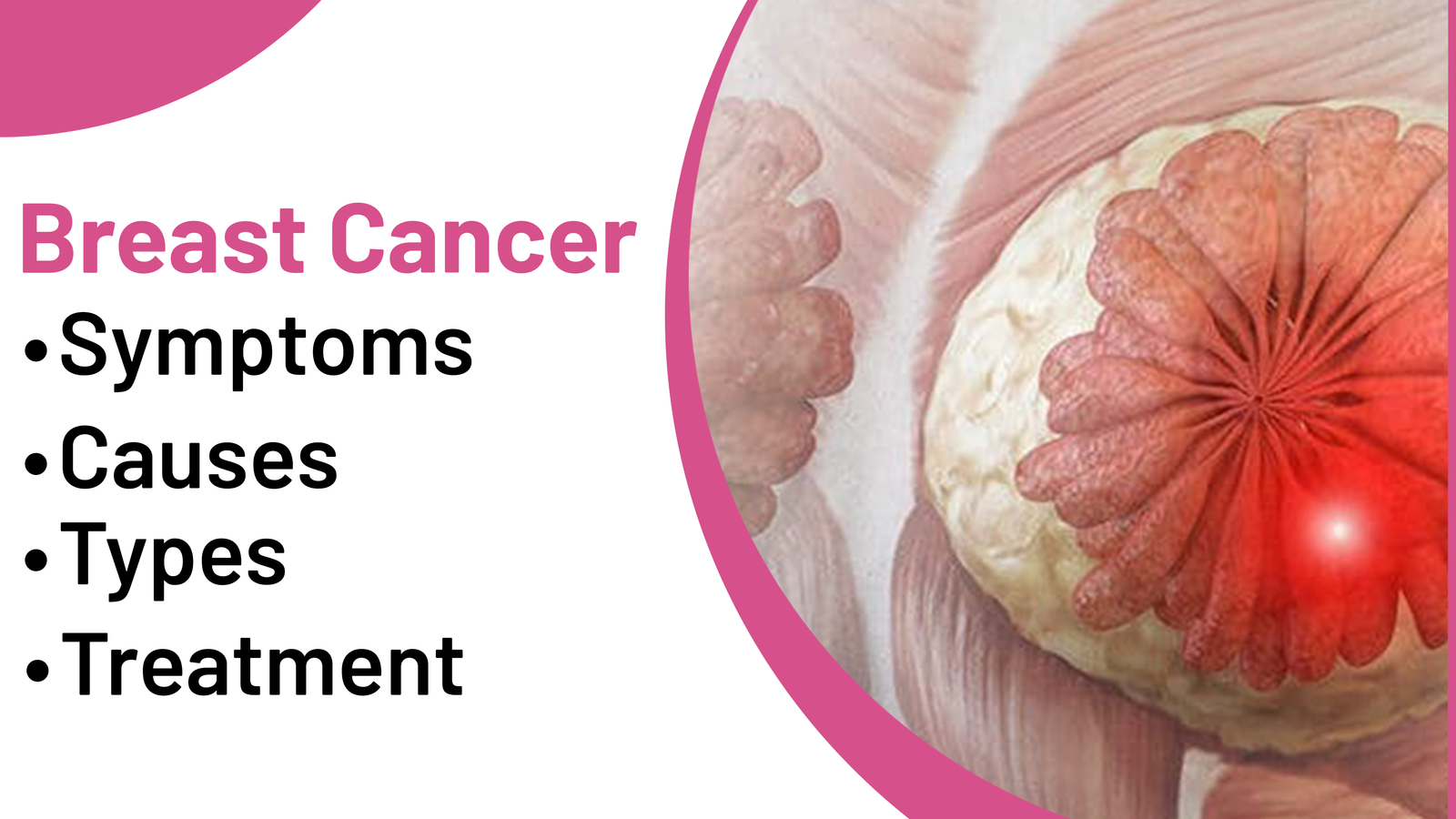
People often assume breast cancer only happens to older women. That’s not true anymore. I’ve treated patients in their 20s. Some are in their 30s. Some pregnant. Some breastfeeding. Some with no family history at all.
It doesn’t always start with a lump. Sometimes it’s a thick patch. Or a bit of dimpling. Sometimes the nipple just feels different. Discharge. Or burning. One breast starts to feel heavier than the other. You notice it in the mirror. Then you ignore it. That’s how many stories begin. And often, they’ve waited too long.
So let me break it down. No big words. Just what you need to know.
What Are the Symptoms?
Every woman’s body speaks differently. But these are the breast cancer symptoms I see again and again:
● A hard lump that wasn’t there before
● Pulling in of the nipple
● Change in shape, especially one-sided
● Skin looks like it’s puckering or dimpled
● Nipple discharge—bloody, watery, or yellow
● Pain that doesn’t go away
● Swelling in the armpit or collarbone
Pain isn’t always present. That’s the dangerous part. Many cancers start silently. By the time it hurts, it may already be spreading. That’s why we always say—get checked early.
Different Types I See Often
There’s more than one type of breast cancer. They behave differently. So they need different treatment plans.
1. Invasive Ductal Carcinoma (IDC)
The most common. Starts in the milk ducts. Spreads into the surrounding breast tissue. Easy to detect. Often found during a routine check.
2. Invasive Lobular Carcinoma (ILC)
Starts in lobules. Grows in a strange pattern. Harder to see on scans. It can feel like thickening rather than a lump.
3. Ductal Carcinoma in Situ (DCIS)
Early stage. Cancer cells are stuck inside the duct. Haven’t spread. If caught here, we can usually cure it completely.
4. Triple-Negative Breast Cancer
Aggressive. Grows fast. Doesn’t respond to hormone meds. Needs chemotherapy. Common in younger women.
5. HER2-Positive Cancer
Has a protein that makes it grow quickly. But it also responds well to targeted drugs like Herceptin. One of the most treatable aggressive cancers now.
Each type has its own pace, risks, and outcomes. This is why one-size treatment doesn't work.
What Causes Breast Cancer?
This is the question I get asked the most. What causes breast cancer? The truth? We don’t have one fixed answer.
But we know what increases the risk:
● Being over 50
● Family history (especially mother, sister, daughter)
● BRCA1 or BRCA2 gene mutation
● Starting periods before 12
● Late menopause (after 55)
● No children or having a first child after 30
● Long-term birth control or hormone therapy
● Obesity after menopause
● Regular alcohol intake
● Radiation to the chest before age 30
Also, shift work, poor sleep, and chronic stress—there’s some evidence that they may affect hormones. But we need more research.
I’ve seen patients with no risk factors get cancer. And others with multiple risks stay healthy. So we stay alert. Always.
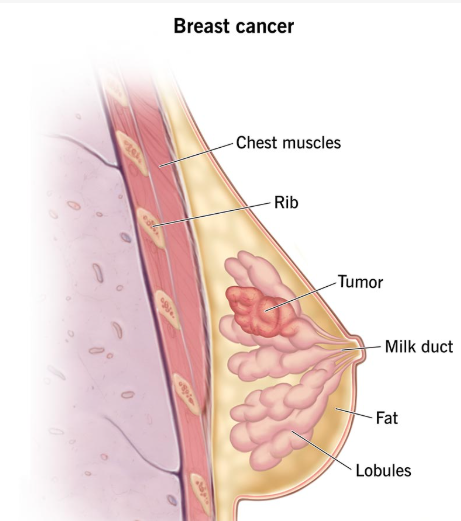
Breast Cancer Risk Factors
Just because you have one risk doesn’t mean you’ll get cancer. But multiple risks? That adds up. Some things we can’t change—like age or genes. But others, we can.
Let’s say your mother had breast cancer at 45. That means you should start screening before 40. Maybe even at 30. Don’t wait for a lump. Don’t assume you’re safe because you feel fine.
Breast cancer risk factors aren’t just family-related. Lifestyle matters. Movement, food, sleep, alcohol, smoking—these all play a part.
Treatment Options
I always break it into four main parts. Not every patient needs all of them. But here’s what treatment usually includes:
1. Surgery
Either removing just the lump (lumpectomy) or the whole breast (mastectomy). Depends on size, location, and spread.
2. Chemotherapy
Chemotherapy may be used before surgery (neoadjuvant chemotherapy) to shrink the tumor, making it easier to remove. It may also be used after surgery (adjuvant chemotherapy) to eliminate any remaining cancer cells and reduce the chance of recurrence.
3. Radiation Therapy
Mostly after lumpectomy. Also used if cancer was near the chest wall or lymph nodes.
4. Hormone Therapy
If your cancer is hormone-sensitive. We block estrogen or progesterone to stop growth.
5. Targeted Therapy
For HER2-positive patients. Drugs like trastuzumab have changed outcomes completely.
Side effects exist. But support has improved. I work closely with oncologists to make sure each woman gets the care she needs, with the least suffering possible.
Let’s Talk About Hope
Here's some real data:
● Stage 0 and 1? Over 98%
● Stage 2? Around 90%.
● Stage 3? Around 72%.
● Even stage 4 has long-term survivors now, thanks to new drugs.
Survival rates have increased because we’re detecting it early. Screening matters. Self-awareness matters more.
What You Can Do Now
Feel your breasts. Once a month. After your period. Stand in front of a mirror. Look for changes. Touch. Press gently in circles. If you’re over 40, book a mammogram. If you have a family history, start earlier. Understanding breast cancer symptoms and causes helps you know exactly what to look for—and when to act.
You can also consult a breast surgeon in Gurgaon if you notice anything unusual.
If you find something concerning, don’t panic. Just come in. I’ll check. No pressure. No panic. Just facts. Because waiting does more damage than cancer ever will. Action is peace.