A mastectomy involves more than surgery. It may feel like you are losing part of yourself. Many women describe the feeling as heavy and emotional. Here's a reassuring fact: You do have options to rebuild, both physically as well as emotionally.
Breast reconstruction with flap surgery is one of the best and most natural options after a mastectomy. This technique, unlike implants, uses your own tissue from the back, abdomen, thighs or buttocks to create a breast which looks and feels natural. It is made of your own body and does not contain any foreign materials. You will no longer need to replace it every few years.
This guide will explore the flap breast reconstruction procedure, including the different types, how it is performed, risks and recovery. It also explains why selecting the best general surgeons in Gurgaon for natural, long-lasting results is important.
What is Flap Surgery to Reconstruct the Breast?
Imagine this: rather than using silicone or saline implants, your surgeon will use your own fat and skin to reconstruct your breast. The tissue from a donor area (such as your belly, back, or thighs) and is carefully sculpted to form a new breast.
The result? A breast that feels soft, moves naturally, and adapts to changes in your body over time. Implants cannot offer this kind of adaptability, which is why breast reconstruction with flaps is often preferred.
Flap Surgery vs. Implants: Quick Comparison
Types of Flap Breast Reconstruction
Not every woman is the same, and not every flap surgery is either. Here are the main options.
1. Abdominal Flaps (Most Popular)
- TRAM Flap: Uses skin, fat, and a section of abdominal muscle.
- DIEP Flap: Advanced techniques—using skin, fat, and vessels only, leaving muscles intact. Faster recovery, less pain, stronger core.
Many women today prefer the DIEP flap, and surgeons like Dr. Sandhya Gupta specialize in it.
2. Back Flap (Latissimus Dorsi)
If your abdomen isn’t an option, surgeons can take tissue from your back. Sometimes paired with an implant for volume.
3. Buttock Flaps (SGAP/IGAP)
Uses fat and skin from the buttocks. Great for women who don’t have enough abdominal tissue.
4. Thigh Flaps
Inner thigh tissue is used for patients with slimmer builds.
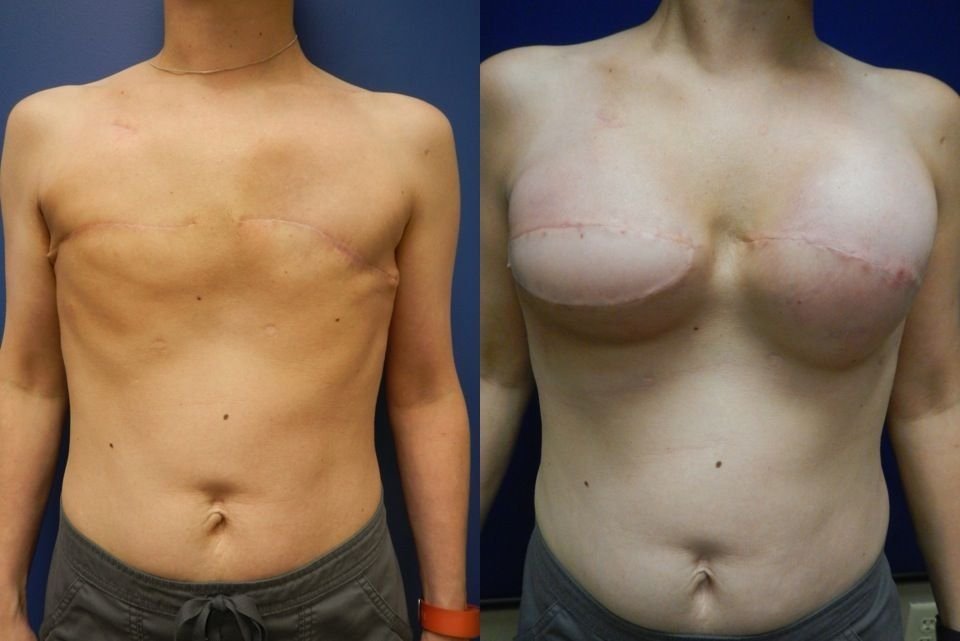
At a Glance: Flap Surgery Options
What Happens During Flap Surgery?
Let’s keep it simple:
- You’ll be under general anesthesia (asleep, no pain).
- The surgeon carefully removes tissue from the donor site.
- Using microsurgery, blood vessels are reconnected under a microscope.
- Tissue is shaped into a new breast mound.
- Incisions are closed, and drains may be placed temporarily.
This entire process is part of breast reconstruction surgery and requires advanced surgical expertise.
Recovery and Results After Flap Breast Reconstruction
Here’s the truth: flap surgery isn’t a quick recovery. Expect:
- Hospital stay: 3–5 days.
- Two healing sites: breast + donor area.
- Discomfort: Pain and swelling are normal, but medications help.
- Full recovery: Light activity in a few weeks; full healing in months
Recovery Timeline
Risks to Consider After Breast Reconstruction With Flap Surgery
All surgeries carry risks. With flap surgery, possible complications include:
- Infection
- Blood clots
- Fat necrosis (hard lumps of fat under the skin)
- Loss of flap (rare but possible)
A skilled surgeon lowers these risks significantly.
Is Flap Surgery Right for You?
You may be a good candidate if:
- You want a natural look and feel.
- You prefer long-term results without future replacements.
- You’re healthy enough for a longer surgery.
It’s always best to have an open conversation with your surgeon about pros and cons of breast reconstruction surgery before making a decision.
Why Patients Choose Dr. Sandhya Gupta
Choosing surgery is tough. But choosing the right surgeon? Even tougher. Many women say they picked Dr. Sandhya Gupta for a few simple reasons:
- She knows her stuff. Especially advanced flaps like DIEP.
- The results look natural. Not stiff. Not fake. Just… real.
- She listens. And that matters when you’re already carrying the weight of everything else.
- She doesn’t disappear after surgery. From the first talk to recovery, her team sticks with you.
Final Thoughts
A mastectomy can shake your self-esteem and confidence. Flap reconstruction is much more than a simple medical procedure. This is an opportunity to reclaim your body as well as your confidence. The surgery can be long and the recovery period is long. However, you'll get a beautiful, natural and soft breast.
Dr. Sandhya Gupta is the best breast reconstruction surgeon in Gurgaon for women. She provides compassionate and expert guidance to make the journey in India safer, smoother and more reassuring.
FAQs For Breast Reconstruction With Flap Surgery
1. How long will it last?
Pretty much for life. Unlike implants, you don’t have to plan another surgery down the road.
2. Will it look exactly the same as before?
Not exactly, but it can feel natural and close to your original breast.
3. What about scars?
There will be scars on the breast and donor site, which fade and soften over time.
4. Can nipples be reconstructed?
Yes, it is optional and can help complete the aesthetic result.