Breast Cancer is the most common cancer among women worldwide. It is crucial to note that men may also develop breast cancer but the chances are very low. Like most serious diseases seeking early detection is extremely beneficial and can improve the chances of controlling breast cancer.
Although women may experience breast cancer signs more distinctly than men, recognizing the warning symptoms is the first step toward taking control of one’s health. In this blog, we’re going to showcase five warning symptoms of breast cancer, explore each of them qualitatively, and explain why seeking medical attention for changes in breast health is paramount.
What is Breast Cancer?
Breast cancer can be defined as a malignant tumour that is formed by uncontrolled growth in abnormal breast tissues. These cells are capable of accumulating to form a mass or lump. Left Untreated malignant tumors may invade nearby tissues and spread to different parts of your body , making it harder to control.
How Does Breast Cancer Start?
Breast cancer occurs when cells in the breast grow uncontrollably. The location of these cells determines the type of breast cancer. The two most common origins are:
Ducts: Tubes that carry milk to the nipple – cancers here are called invasive ductal carcinoma.
Lobules: Glands that produce milk – cancers here are known as invasive lobular carcinoma.
Less common types include inflammatory breast cancer and Paget’s disease of the breast.
5 Warning Signs of Breast Cancer
Below are the 5 breast cancer warning signs. If you notice any of these signs, consult a doctor promptly for further evaluation.
1. New Lump in the Breast or Armpit
The growth of a lump in the underarm or breast is one of the major signs of breast cancer. The presence of a lump is widely accepted to be one of the most common breast cancer symptoms that women know. Almost all lumps of the breast are painless and can be present in varying shapes and sizes. Although not all breast lumps are cancerous, there is reason to worry about any abnormal lump as they do require the attention of a healthcare professional.
The lump could be hard or firm and the borders could be uneven or smooth. In certain instances the lump can occur along with other symptoms, like redness or swelling of the breast. Additionally, it is important to keep in mind the fact that not every lump are a result from breast cancer. Some can be benign (non-cancerous) like cysts and fibroadenomas. Any medical specialist will be able evaluate the issue and pinpoint the cause.
What can be done? If a lump is discovered the best thing to do is schedule an appointment with your doctor for a medical checkup with a specialist. They might examine the body and may ask for an ultrasound, xray as well as a biopsy, to detect that cancerous tumors are not present.
2. Breast Dimpling or Skin Texture Changes
Changes in the skin of the breast may also be a sign of underlying disease. Some common alterations include:
Redness or inflammation: The skin of the breast may appear red and inflamed, or have an angry complexion, which can be linked to an infection and, as such, be a sign of inflammatory breast cancer. This fiery form of the disease is infrequent but aggressive.
Dimpled or thickened skin: Breast Dimpling or peau d’orange can occur from the skin appearing like an orange or dimpled. This is a result of cancer cells damaging the breast tissue and causing lymphatic drainage forced swelling as well as puckering.
Scaly or flaky skin: A rare form of Paget’s Disease of the breast can stem from scaly or dry patches around the breasts’ nipples. This form of breast cancer is marked by- in-skin lesions are located on-Nipple & areola.
What should you do? Consult a professional immediately, if possible seek out any of these abnormal changes with skin. An alteration might stem infection or a more benign problem, but regardless of the matter, medical assistance must be sought.
3. Redness and Swelling
A breast that is swelling whether in a small portion or over the entire breast, could be an indication of a problem. The skin could appear tight or stretched, or appear shiny and the breasts may appear heavier than normal.
In addition, swelling can happen without the appearance of a lump, making it harder to spot initially.
What can you do? Watch out for the swelling that isn't going away with time. If swelling occurs unresolved or is not accompanied by any other symptoms, get an evaluation by a physician immediately.
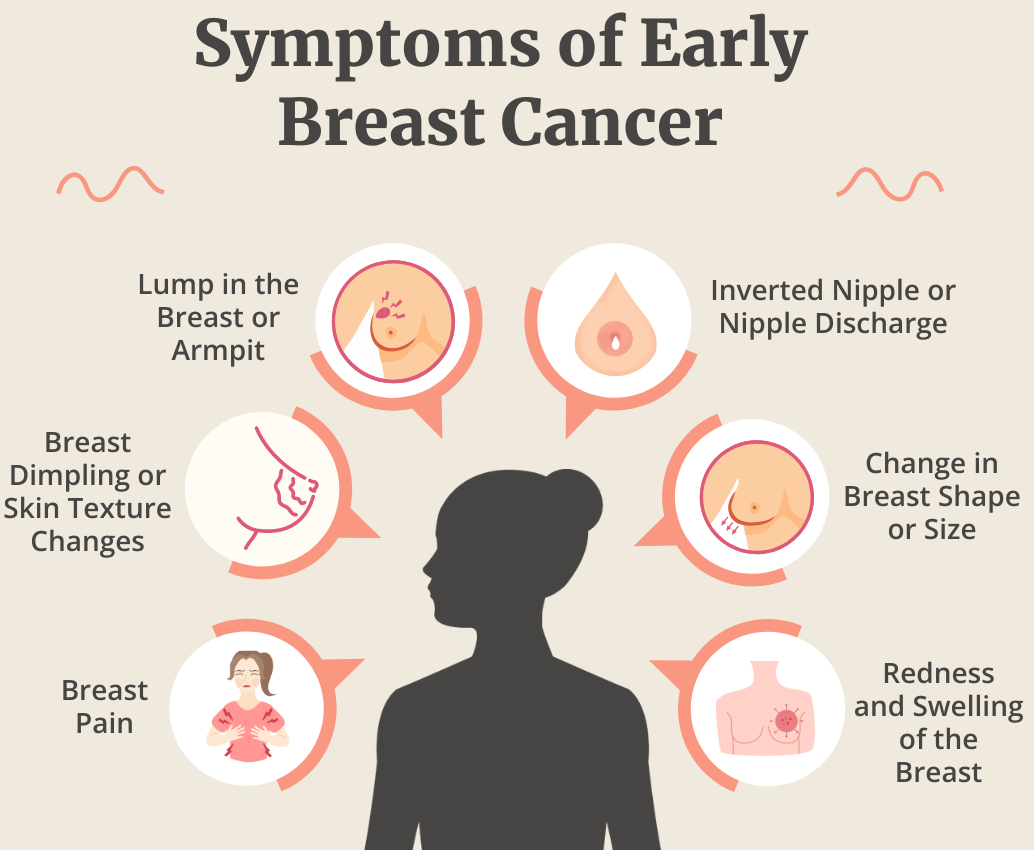
4. Nipple Discharge
The nipples can offer critical early clues to breast cancer. Changes to watch for include:
- Nipple retraction or inversion
- Abnormal discharge
- Nipple pain or tenderness
- Peeling or thickening of the skin of the areola or nipple
These signs may indicate malignancies that are underlying, such as Paget's disease or ductal carcinomas close to the nipple.
What should you do? Don’t dismiss nipple changes, especially if they’re persistent. See a doctor who could suggest a mammogram, ultrasound or other diagnostic tests to further investigate.
5. Swollen Lymph Nodes
Lymph nodes specifically those located in the underarm or around the collarbone, might become tender or swollen when breast cancer starts to spread outside of the breast tissue.
The lymph nodes that are swollen may appear as small lumps that are firm and may be painful or not.
What action should you take? If you experience any unusual swelling in these areas, you should talk to your doctor. Diagnostic imaging or a biopsy could be required to determine the reason for the issue and determine potential cancer-related spread.
When to Consult a Medical Professional ?
Most symptoms may accompany non-cancerous issues as well, but caution would be prudent in this situation. If you see any of the symptoms pointing towards breast cancer, do not hesitate to visit your healthcare professional at the very earliest opportunity.
Having early detection increases the chances of successful treatment options. Even if the condition turns out to be harmless, in the end, at least one can be relaxed knowing that necessary steps were taken for one’s health.
Conclusion
Breast cancer is a very serious disease that should never be ignored. The positive side is that early diagnosis plays an important part in boosting the chance of success for treatment. You can protect your health by keeping an eye on symptoms such as pain, lumps, skin changes, nipple discharge, or changes in breast size, you can take preventive steps to protect your health. Do you think about scheduling an appointment with your doctor if you examine any of these signs?
Your Breast Health Matters
You're likely to feel anxious or worried if you're worried that your breast health is in danger. will make a big difference in the treatment options you have and your outcomes. Dr. Sandhya Gupta, a compassionate and renowned breast oncoplastic surgeon in Gurgaon. She has a stellar record of guiding her patients through the management of benign and cancerous breast disease. She uses a methodical and empathetic way to ensure you feel supported, in control, and well-informed at each stage.
You should not delay in seeking help. Call today to schedule an appointment. Early intervention is key in achieving better health.